Leadership Training vs. Management Training: What’s the Difference?

Most teams hit a point where results stall, morale dips, or execution slips. The default fix sounds like, “Let’s do some leadership training.” Sometimes that’s right. A lot of times, it’s not.
At The Alternative Board, we see this mix-up all the time. Companies buy a “leadership” program when the real gap sits in day-to-day management, or they double down on management systems when the team actually needs direction, alignment, and confidence to change. Once you spot the difference, you can choose training that fits your role, your team, and your stage of growth.
Leadership Training vs. Management Training: The Quick Definitions
People mix these up because great leaders often manage and great managers often lead. But the training goals stay different.
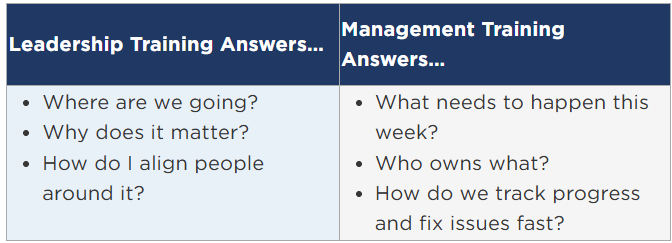
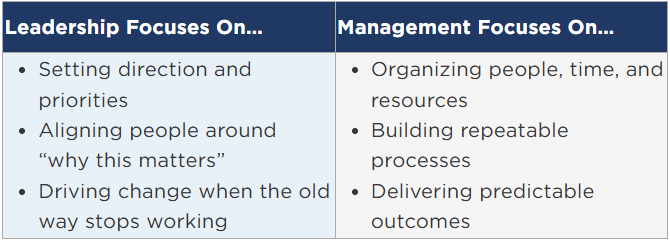
Leadership training helps people set direction and influence others to move toward it. Think: vision, alignment, motivation, and change.
Management training helps people plan work, run systems, and deliver results. Think: priorities, process, accountability, and execution.
The Cost of Choosing the Wrong Program
When you pick the wrong type of development, you usually see one of these patterns:
You invest in leadership training, but execution stays sloppy. Deadlines slip, ownership stays unclear, and managers avoid tough performance conversations. Many managers never get taught how to manage people well, which leaves teams under-supported.
You invest in management training, but the team still lacks direction. People follow the process, yet energy drops because no one feels connected to a clear “why.”
What to Expect: Most Roles Need Both (Just in Different Proportions)
The right mix depends on seniority, team maturity, business stage, and current pain. A simple rule of thumb:
If your team needs clarity and buy-in, lean toward leadership.
If your team needs consistency and follow-through, lean toward management.
Leadership vs. Management in Practice: Vision vs. Execution
Leadership points the way. Management builds the path and keeps everyone moving.
Same Scenario, Two Different Lenses
Scenario A: A key project slips behind schedule
Leadership lens: Re-states the goal and what “done” looks like. Removes confusion: “Here’s the decision. Here’s the direction.” Builds buy-in: “Here’s why this matters and what we will stop doing to make room.”
Management lens: Rebuilds the plan with timeline, milestones, and owners. Sets a check-in cadence and escalation path. Locks accountability: “You own X by Friday; I own Y by Wednesday.”
Scenario B: The team resists a new process
Leadership lens: Names the change and the reason behind it. Addresses fear and friction directly. Models the new behavior and reinforces the standard.
Management lens: Documents the workflow and roles. Trains the team on the steps. Audits adoption and corrects gaps.
A Practical “Tell” You Can Use Today
If the problem sounds like “we don’t know where we’re going,” you likely need more leadership.
If it sounds like “we know what to do but it doesn’t happen consistently,” you likely need more management.
What Leadership Training Typically Covers
Leadership training helps someone move from “I manage tasks” to “I shape direction and bring people with me.”
Skills Leadership Training Builds
Strategic thinking: make smart bets with incomplete information
Vision-setting: define a clear destination and priorities
Decision-making under uncertainty: choose, communicate, and adjust fast
Influence without authority: earn buy-in across teams
Clear communication: keep messages simple and repeatable
Culture-building: reinforce “how we work here”
Change leadership: guide people through uncertainty and resistance
Faster alignment and fewer spin cycles
Better ownership and initiative across the team
More resilience during change (less panic, more problem-solving)
A stronger bench of future leaders through coaching and development
Behaviors Leadership Training Strengthens
Many modern programs also start with inside-out basics: values clarity, purpose alignment, and strengths awareness—because people follow leaders they trust and understand.
Outcomes You Should Expect
Faster alignment and fewer spin cycles
Better ownership and initiative across the team
More resilience during change (less panic, more problem-solving)
A stronger bench of future leaders through coaching and development
What Management Training Typically Covers
Management training helps people run the day-to-day with less stress and more consistency—because many managers never get formally taught how to manage people and work.
Skills Management Training Builds
Goal-setting and planning: turn priorities into deliverables
Prioritization: decide what matters this week (and what can wait)
Operational cadence: set rhythms for check-ins, reporting, and follow-through
Performance management: set expectations, track progress, course-correct early
Accountability: clear owners, clear deadlines, clear consequences
Delegation: assign outcomes, not just tasks
Feedback and 1-on-1s: run consistent conversations that actually improve performance
Process improvement and handoffs
Meeting management: agendas, decisions, action items
Cross-functional coordination so work doesn’t stall between teams
People Systems Management Training Strengthens
Performance management: set expectations, track progress, course-correct early
Accountability: clear owners, clear deadlines, clear consequences
Delegation: assign outcomes, not just tasks
Feedback and 1-on-1s: run consistent conversations that actually improve performance
Operations Management Training Covers
Process improvement and handoffs
Meeting management: agendas, decisions, action items
Cross-functional coordination so work doesn’t stall between teams
Why This Training Matters More Than Most Companies Admit
TAB calls out a common pattern: managers often rank among the most poorly trained employees, and many business owners don’t spend enough time teaching managers how to manage. The “accidental manager” problem is real—the 2023 CMI study found 82% of new managers had no formal training Your Team Needs Management Training.
The Core Differences: Mindset, Time Horizon, and Measures of Success
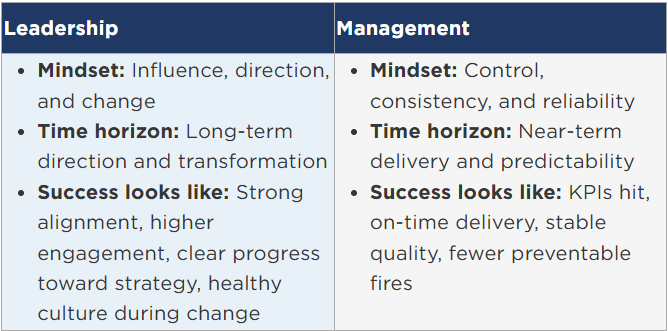
Both matter. The win comes from knowing which one your team lacks right now.
One nuance worth watching: managers may naturally lean risk-averse and conflict-avoidant—which can protect stability but slow change when the business needs a push. Leadership training often targets that gap directly.
Common Myths: “Leaders Don’t Manage” and “Managers Can’t Lead”
These myths sound catchy, but they hurt teams.
Myth #1: “Leaders Don’t Manage”
Real leaders still need enough management skill to set clear expectations, create follow-through, and hold the line on standards. The management role is not the less exciting cousin—organizations need both skill sets to perform.
Myth #2: “Managers Can’t Lead”
Managers lead every day when they coach performance, build trust, communicate priorities clearly, and push change inside their team.
The Truth: Strong Organizations Build “Leader-Managers”
The mix shifts by level:
Frontline managers: heavier management (clear plans, consistent coaching)
Middle managers: balanced mix (lead across teams, execute through others)
Executives: heavier leadership (strategy, culture, change) with enough management to keep execution honest
How to Tell Which Your Team Needs Right Now
Signs You Likely Have a Management Gap
Missed deadlines or “surprise” delays
Unclear ownership (“I thought they had it”)
Inconsistent 1-on-1s or vague expectations
Weak accountability and follow-through
Low morale or “checked out” energy
Lack of direction or too many shifting priorities
Resistance to change, even when the change makes sense
Poor alignment across teams (everyone rows in a different direction)
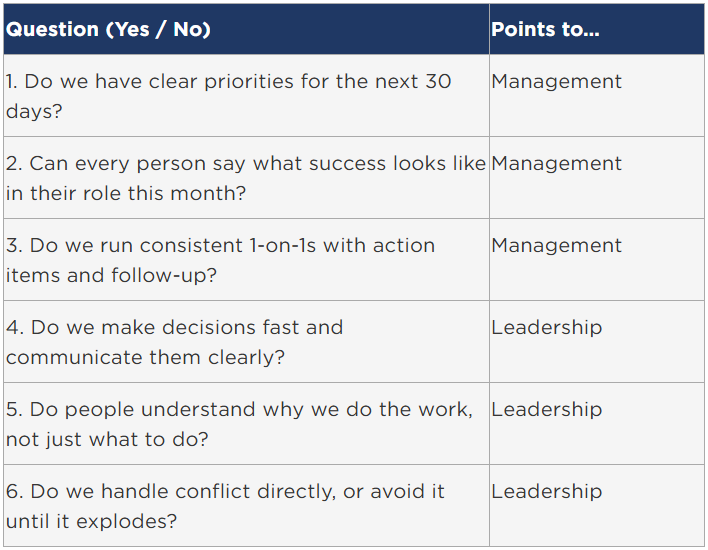
Answer yes or no to each question:
Role-by-Role Guidance: What Training Works Best at Each Level
New Managers (0–18 Months): Build Management Fundamentals First
First-time managers often fall into the “accidental manager” bucket and need structure before inspiration. Best focus areas:
Delegation that sticks: clear outcomes, deadlines, check-ins
Feedback and performance conversations
Running 1-on-1s and team meetings with consistency
Experienced Managers: Lead Through Others and Across the Business
As scope grows, leadership expectations grow too. Best focus areas:
Coaching and developing people (not rescuing)
Cross-functional influence
Change communication and alignment
A practical leadership lens that fits well here is the CARE framework: Clarity, Autonomy, Relationships, Equity. It gives managers a short checklist for leading teams through pressure and change.
Executives: Strategy, Culture, and Change at Scale
Executives still need management discipline, but their biggest leverage comes from leadership. Best focus areas:
Strategic leadership and decision-making
Culture and organizational design
Leading major change without burning people out
Choosing the Right Mix: A Simple Decision Framework
A Simple Decision Tree
What is your business stage right now? Fast growth or big change → lean leadership. Stabilizing operations or scaling delivery → lean management.
What symptoms show up most? Execution issues (misses, confusion, inconsistency) → management training. Direction and buy-in issues (morale, alignment, change resistance) → leadership training.
Who is the audience? First-time managers → start with management basics. Senior leaders → start with leadership, then reinforce management systems.
Recommended Blend by Role Level
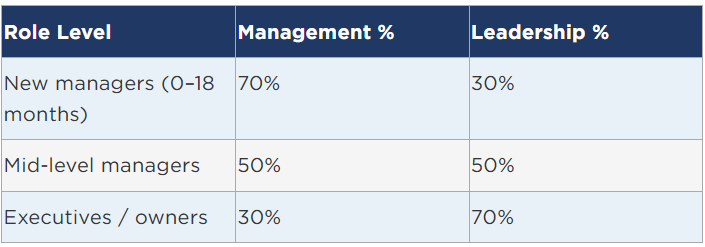
If your organization has many accidental managers or clear execution pain, shift more time toward management skills first.
Next Steps You Can Take This Month
Audit skills: ask managers and direct reports where work breaks down (planning, feedback, clarity, change).
Pick a pilot group: one level (new managers or mid-level) and one clear goal (better 1-on-1s, stronger delegation).
Build a roadmap: 6–12 weeks of training + practice + reinforcement. Future-ready leadership comes from ongoing development, not a single workshop you check off.